
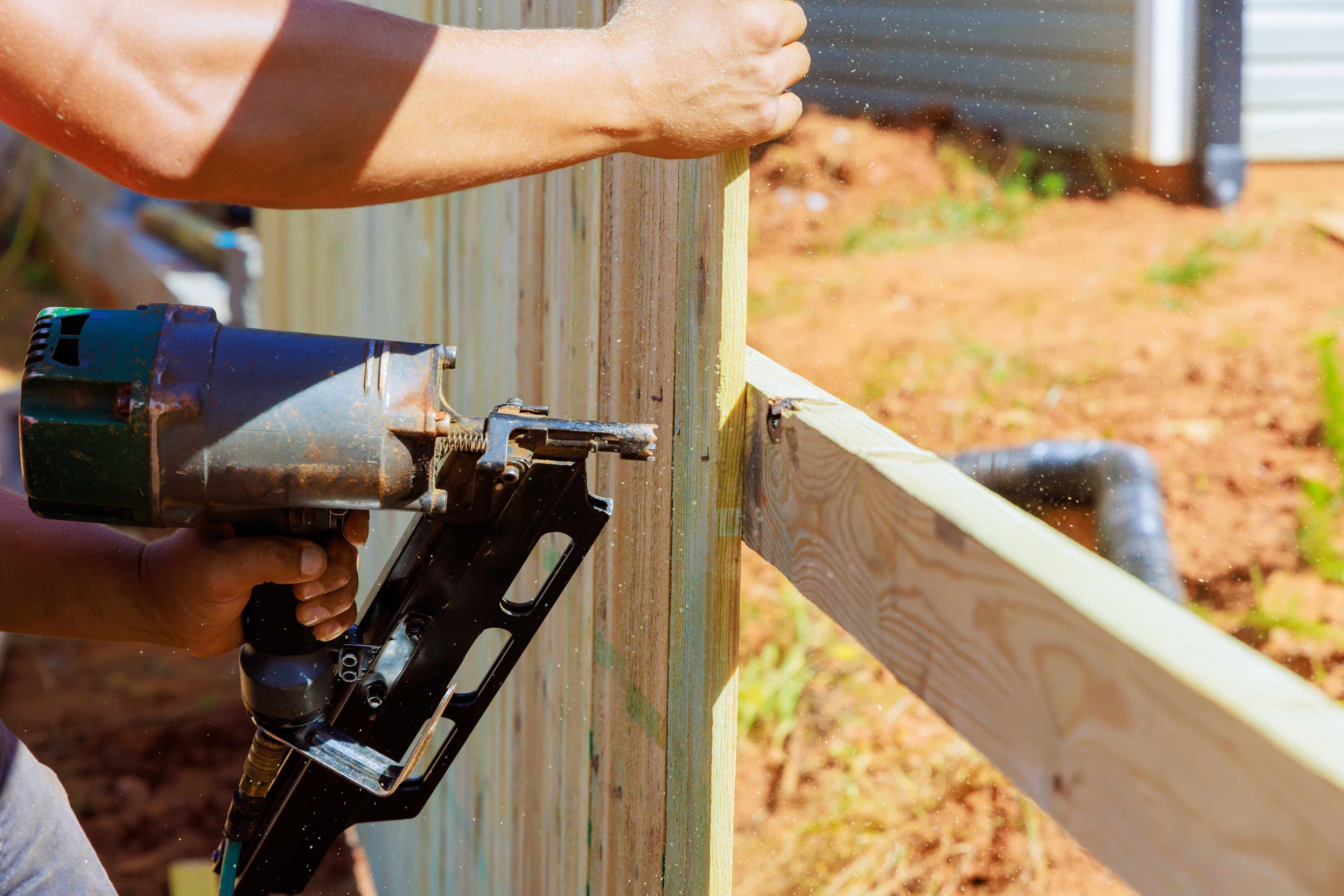
Free Estimates
Same-Day Service — Subject to Availability
Emergency Service — Subject to Availability
Financing Available
Cash & Credit Cards Accepted
Initial estimate
What helps us understand the request
A clear description of the work and photos of the affected area, when available, help with the initial estimate.
Fence Services in DFW
Fence Condition Depends on More Than the Boards You See
Posts, rails, pickets, gates, hardware, and the surrounding soil all affect how a fence performs over time.
It is easy to focus on a broken picket or a section that looks worn, but fence condition depends on more than the visible boards. Posts carry the structural load, rails tie everything together, gates rely on hardware and alignment, and the surrounding soil and drainage conditions affect how well posts stay anchored over time.
Because these parts work together, an issue in one area can eventually affect another. A loose post, for example, can lead to sagging rails and misaligned pickets even if those boards themselves are in decent shape. Reviewing the fence as a whole helps identify what is actually causing a visible problem.
✓Posts
✓Rails
✓Pickets / panels
✓Gates
✓Hinges
✓Latches
✓Fasteners
✓Post bases / support
✓Surrounding soil and drainage
Common styles
Common Residential Fence Types
An educational look at materials found on residential properties, not a claim that every material listed is serviced.
Wood privacy fence
Solid board fencing commonly used for backyard privacy, built from posts, rails, and pickets set close together.
Decorative wood fence
Wood fencing styles with spacing, patterns, or shorter heights used more for boundary definition and appearance than full privacy.
Metal fence
Fencing built from metal panels or pickets, often used for boundary lines, pool areas, or decorative purposes.
Chain-link fence
Woven wire fencing supported by metal posts and rails, commonly used for durability and cost-effective boundary marking.
What we look for
Common Fence Problems
Not every issue below means the whole fence needs to be replaced. The right response depends on the extent of the problem.
✓Leaning fence
✓Loose posts
✓Damaged or rotted wood
✓Broken pickets
✓Damaged panels
✓Loose rails
✓Gate sagging
✓Gate rubbing or not closing
✓Latch or hinge problems
✓Storm or wind damage
✓Damaged fasteners
✓Sections separating
✓Visible corrosion on metal components
✓Soil movement around posts
Understanding movement
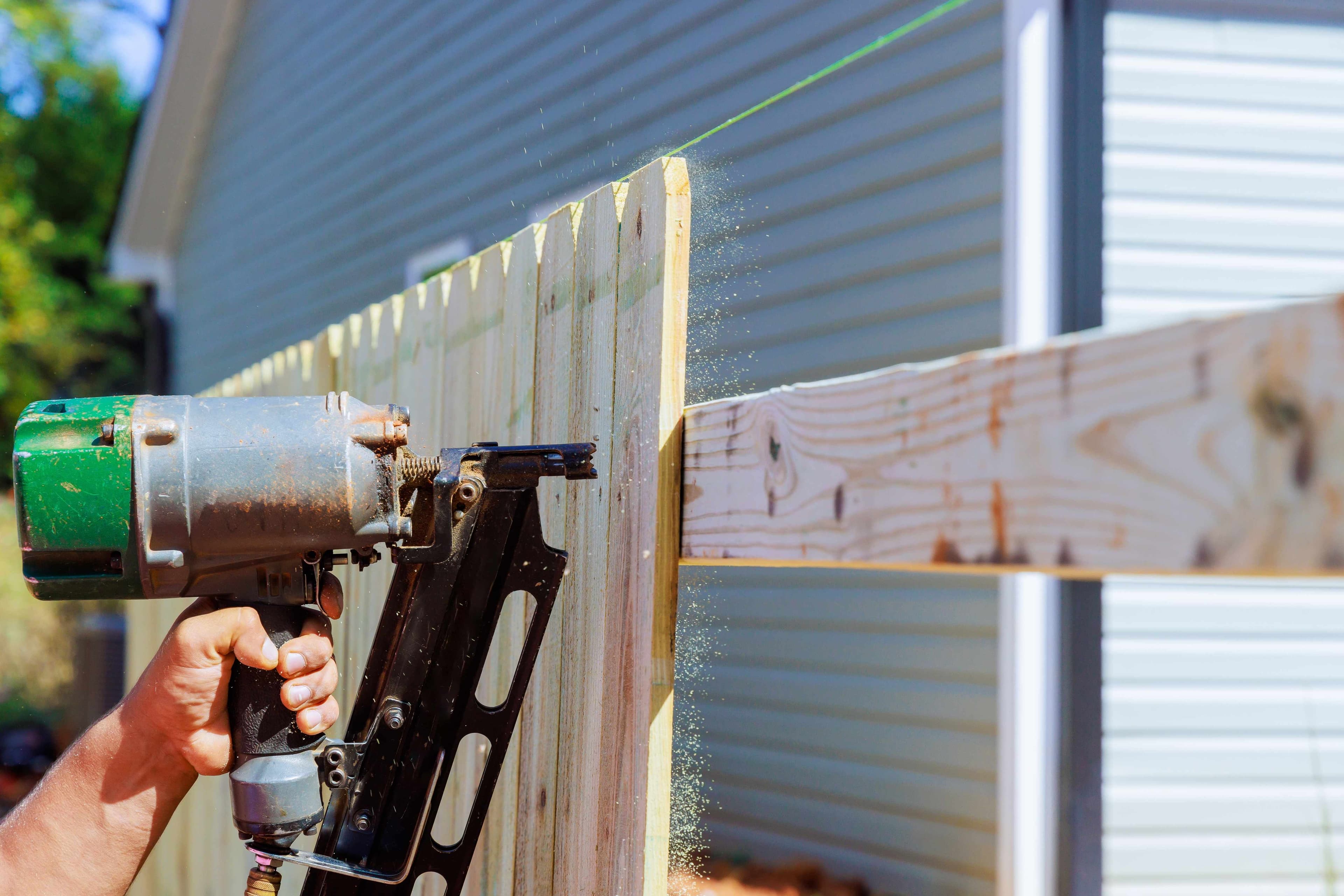
Why Fences Lean
Leaning can have more than one cause, so we do not assume a single explanation without a closer look.
A leaning fence is one of the more noticeable signs that something needs attention, but the reason behind it is not always obvious from a distance. Sometimes it is a single post that has loosened. Other times, soil movement across a whole run of fence has affected several posts at once.
We look at the posts, the ground around them, and the overall pattern of the leaning before recommending a repair, rather than guessing at a cause without checking the actual condition.
Possible causes
✓Loose or deteriorated posts
✓Soil movement
✓Damaged post bases
✓Wind loading
✓General deterioration over time
✓Impact from a vehicle, falling limb, or other object
Making the right call
Post Repair, Section Repair, or Replacement
The right approach depends on how much of the fence is affected.
A localized repair may make sense when:
✓Deterioration is limited to a specific section
✓The supporting posts remain sound
✓A gate issue is related to hinges, latches, or alignment rather than the frame itself
✓Matching material is available for the affected section
A larger repair or replacement may need consideration when:
✓Deterioration is widespread across multiple sections
✓Several posts are compromised
✓The overall structure no longer provides reliable support
✓Continued section-by-section repair is becoming impractical
Gate care
Gates Depend on Alignment as Much as Hardware
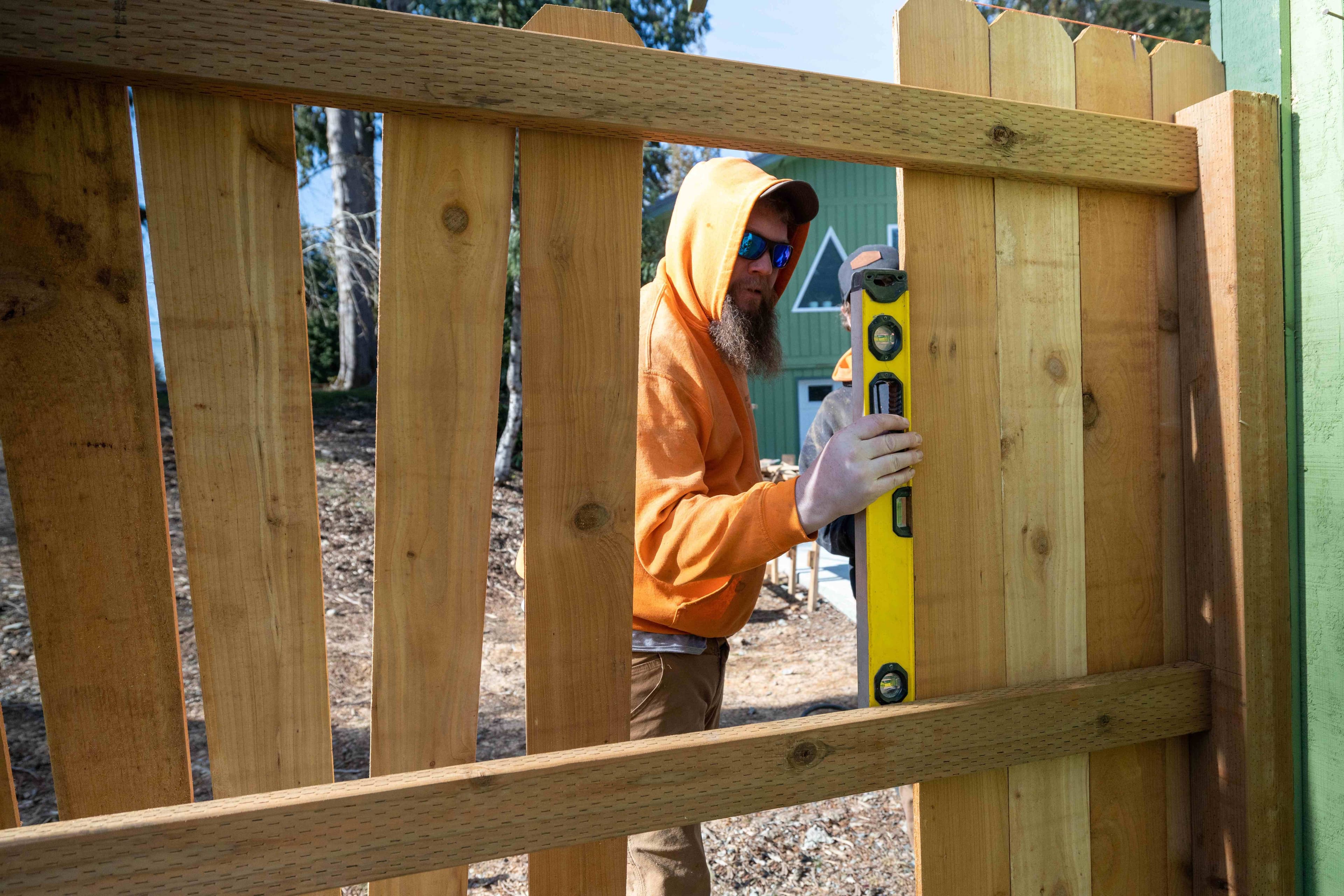
A sagging or sticking gate is often about more than just the latch.
✓Hinges
✓Latches
✓Alignment
✓Sagging
✓Posts supporting the gate
✓Clearance at the bottom and sides
A gate that rubs, sags, or will not latch properly can point to worn hinges, a shifting support post, or hardware that no longer holds alignment. Because the supporting post carries the weight of the gate, post condition is often part of a gate repair conversation.
Beyond the fence
Fences and Related Outdoor Areas
Fence work sometimes overlaps with other outdoor projects, depending on what a homeowner is trying to accomplish.
Related Services
Related Fence Services
Explore other services that may help with the same property project.
Exterior
Decks
Deck repair and maintenance for boards, railings, stairs, fasteners, staining, sealing, and visible accessible deck conditions across Dallas–Fort Worth.
Learn moreExterior
Pressure Washing
Pressure washing for compatible driveways, patios, walkways, siding, and outdoor surfaces.
Learn moreInterior & Exterior
Painting
Interior and exterior painting with surface preparation, patching, trim work, and finish updates.
Learn moreMaintenance
Property Maintenance
Flexible recurring and one-time maintenance for homes, rentals, and properties.
Learn moreQuestions
Fence FAQs
Why is my fence leaning?
Leaning can relate to loose or deteriorated posts, soil movement, a damaged post base, wind loading, general deterioration, or impact. We do not assume a single cause without taking a look.
Can a leaning fence be fixed without replacing the whole thing?
Often, yes, if the issue is limited to a specific post or section and the rest of the fence remains sound. More widespread post problems may call for a larger repair.
My gate is sagging. What usually causes that?
Gate sagging is commonly related to worn hinges, a shifting support post, or hardware that has loosened over time. Checking the hinges, latch, and supporting post helps identify the cause.
Do you repair individual fence boards?
Yes, individual or small groups of damaged boards can often be replaced without redoing the entire fence, depending on the availability of matching material.
Does fence material affect the repair approach?
Yes. Fence material and construction can affect compatible replacement materials, hardware, repair methods, and overall project scope. The existing fence should be reviewed before deciding on the most practical approach.
Can storms damage a fence?
Yes. Wind, falling limbs, and heavy rain can all contribute to fence damage, from loose sections to more significant structural issues.
How do I know if I need a repair or a full fence replacement?
It depends on how widespread the deterioration is, the condition of the posts, and whether continued repairs are still practical. We can review the fence and discuss realistic options.
Can you match my existing fence style?
We try to match material, style, and height as closely as reasonably available, though exact matches are not always possible with older or discontinued materials.
Do you stain or seal wood fences?
Yes, staining and sealing can be part of ongoing wood fence care, typically after any needed repairs are completed.
Why does soil movement affect my fence?
Changing soil moisture can shift the ground around posts over time, which can contribute to loosening or leaning, particularly during periods of heavy rain followed by dry conditions.
Where we work
Fence across DFW
Explore service availability by city or contact us to discuss a location not listed.
Don't see your city listed?
We may still serve your area. Give us a call to check availability.