
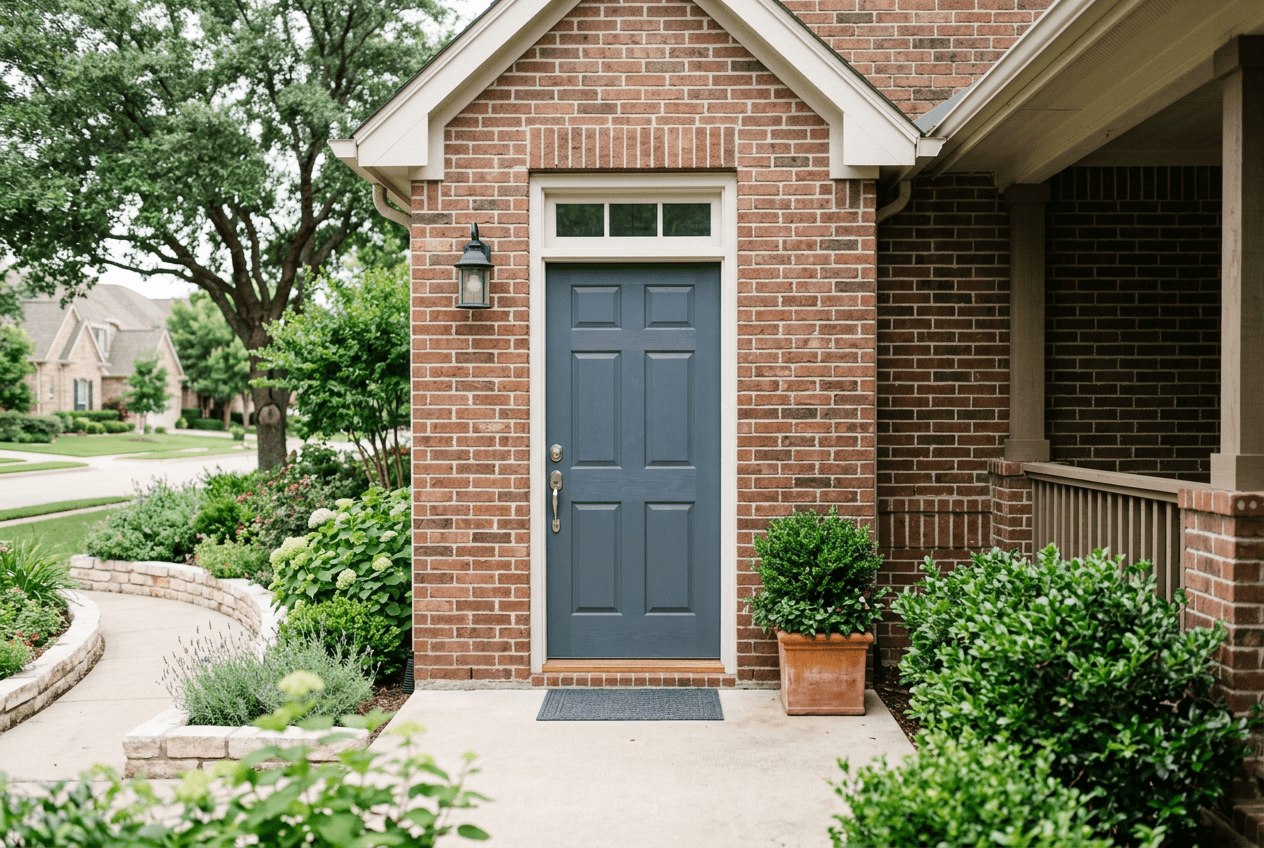
A draft around your front door does not automatically mean the door needs replacing. The problem may involve a worn seal, the bottom of the door, or how the door sits and closes in its frame.
For Dallas–Fort Worth homeowners planning fall maintenance, checking the entry door is a practical step before cooler weather. National Weather Service climate normals show average daily lows falling from 57.1°F in October to 46.2°F in November. These are long-term averages, not a forecast for this year.
Source: National Weather Service
The useful first question is simple: where do you notice the draft, and does the door still close normally?
Weatherstripping and Caulk Have Different Jobs
Weatherstripping seals around moving components, such as the edges of an operable door. Caulk is used for suitable gaps between stationary components.
That distinction matters when choosing a repair. A gap where the door meets its frame needs a solution that allows the door to keep opening and closing. It should not simply be filled with caulk.
Source: South Carolina Energy Office
For maintenance of stationary exterior joints, see our guide to exterior caulking in Dallas–Fort Worth.
When the Perimeter Weatherstripping Needs Attention
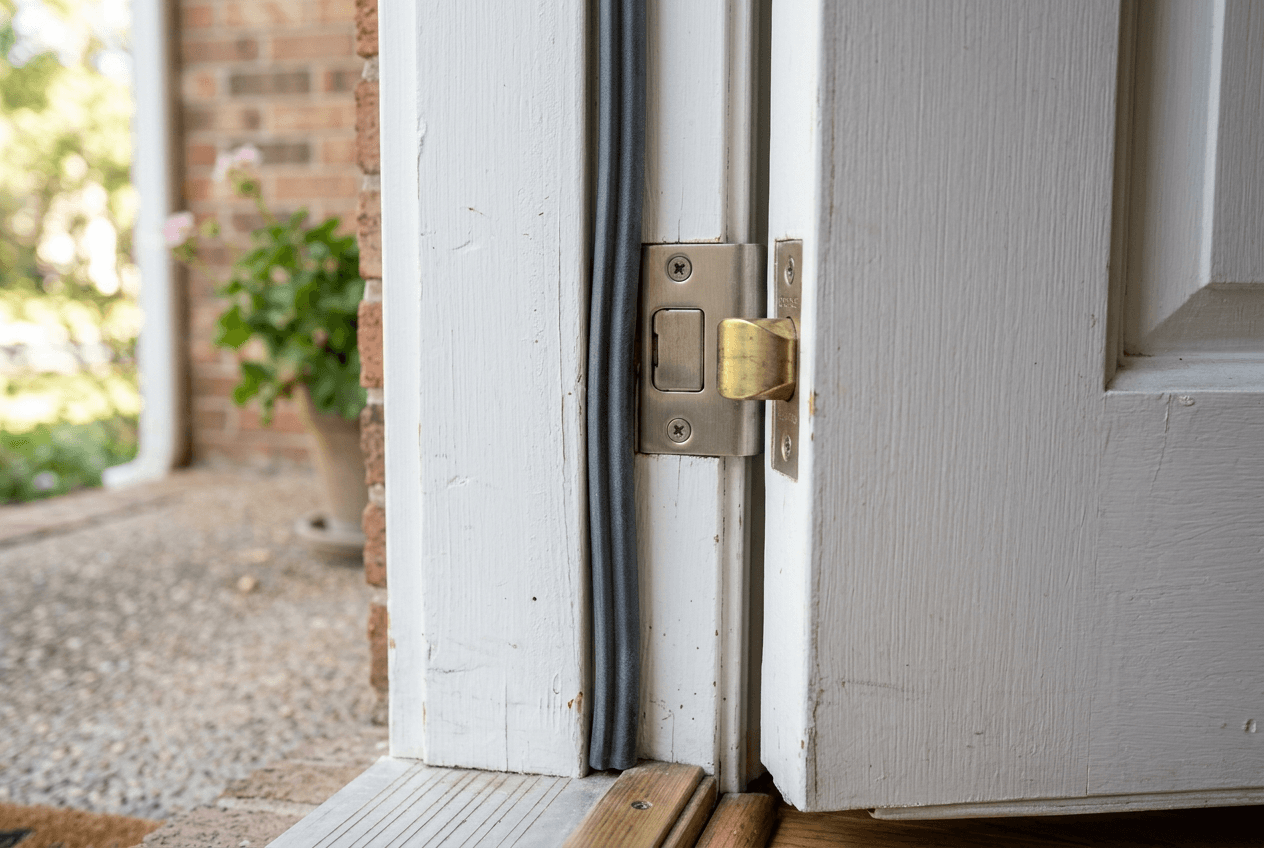
Look for missing, torn, cracked, or painted-over weatherstripping along the sides and top of the opening. Damaged material may need replacement.
However, an intact seal cannot work properly if the door does not meet it evenly. Therma-Tru's troubleshooting guidance identifies both damaged weatherstripping and uneven door contact as possible causes of drafts or visible light around an entry door.
Source: Therma-Tru troubleshooting guide
Before buying replacement material, identify the existing attachment style. For example, Therma-Tru's replacement instructions describe weatherstripping that fits into a groove in the jamb. That is a specific system, so do not assume an adhesive strip is interchangeable with the original part.
When the Draft Is Under the Door
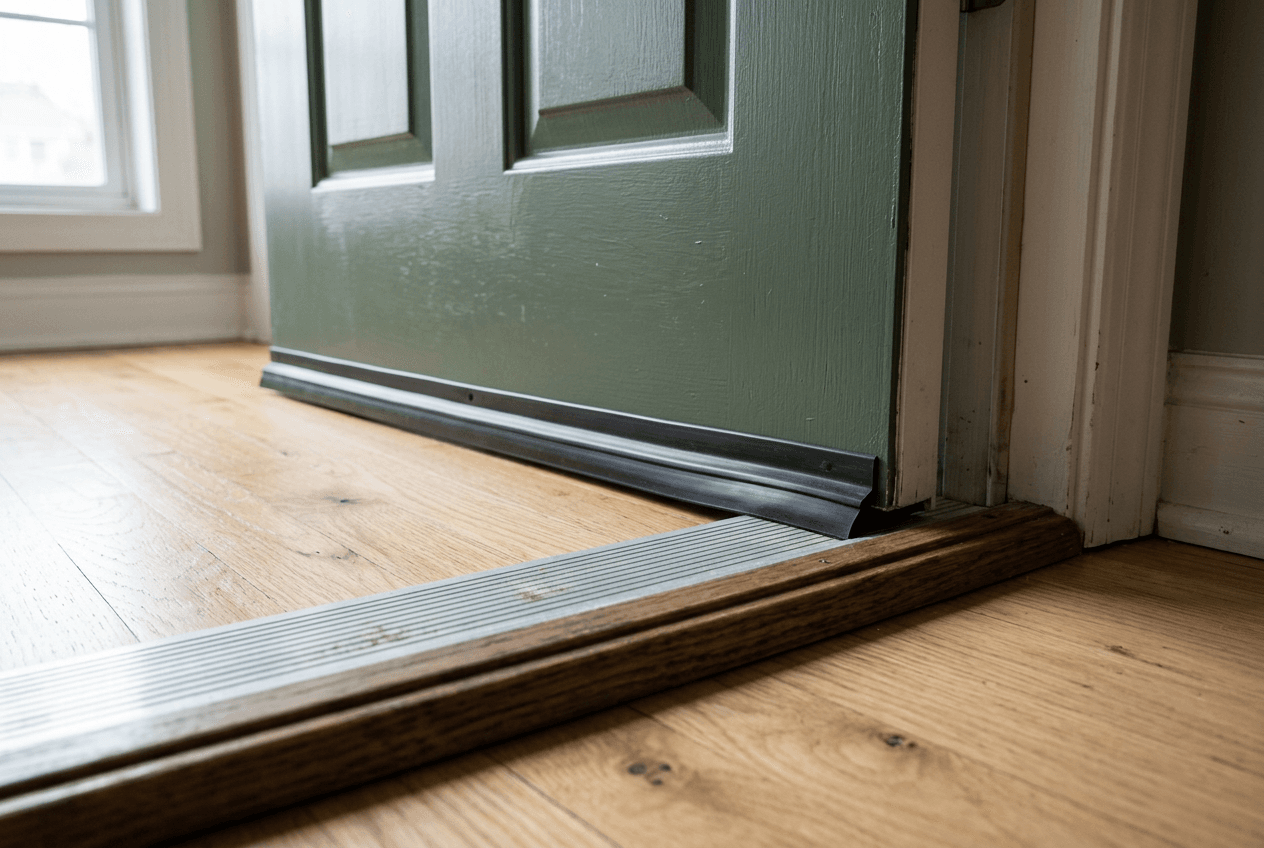
If the draft is concentrated at floor level, ask for the door-bottom seal or sweep and the threshold to be checked together.
A damaged bottom seal, an uneven sill, or a door sitting out of square can affect the seal at the bottom. The appropriate repair depends on the condition of the complete assembly, rather than the size of the visible gap alone.
Source: Therma-Tru troubleshooting guide
Describe whether the door also scrapes, catches, or becomes difficult to close. Those details are useful when requesting an assessment.
When Alignment May Be Part of the Problem
Mention these symptoms when discussing a repair:
- The door meets the seal at the top before the bottom, or vice versa.
- The gap around the door looks uneven.
- The door moves noticeably inward and outward while latched.
- Closing or latching takes extra effort.
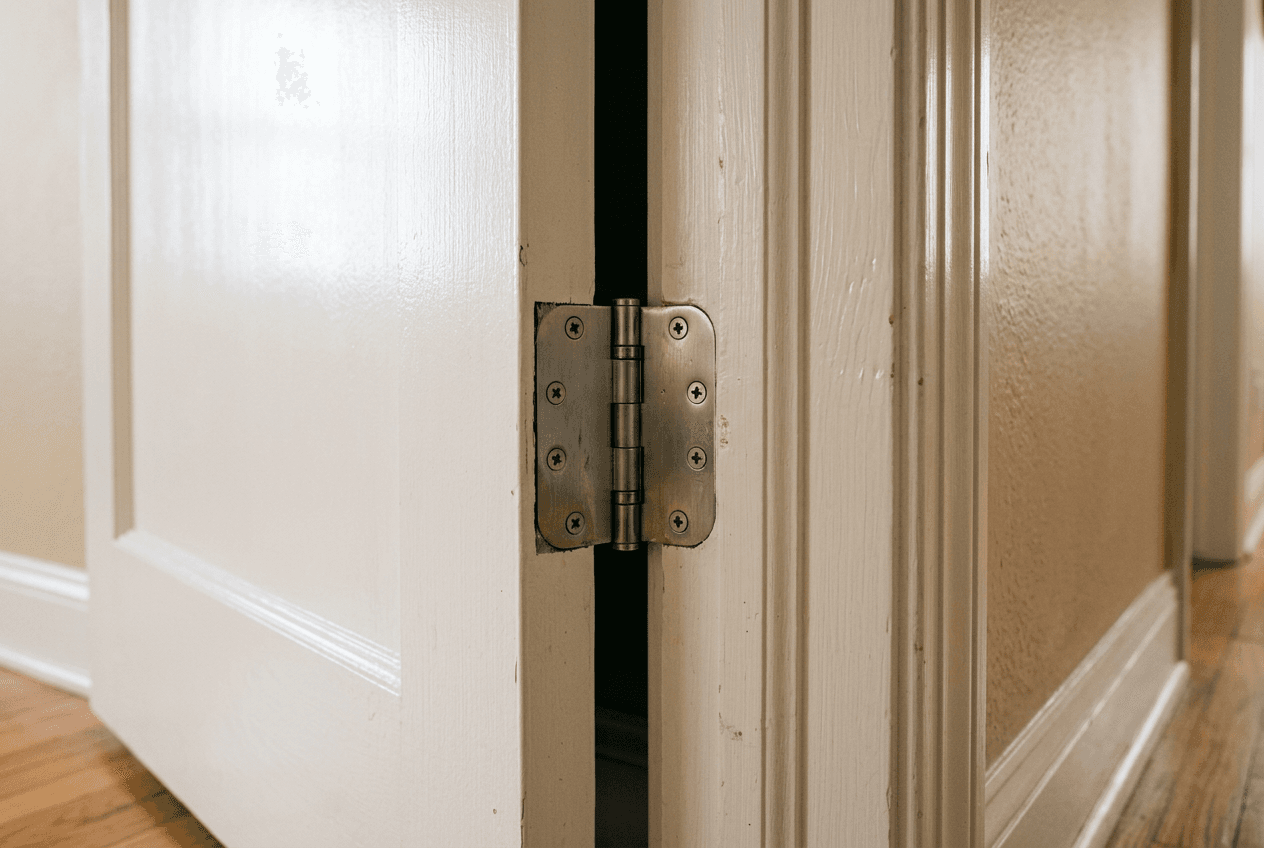
Depending on the door system, the assessment may involve hinges, the strike plate, or frame alignment—not just new weatherstripping.
Source: Therma-Tru troubleshooting guide
These signs help describe a problem; they do not establish its cause. A sticking door alone is not enough to diagnose a foundation issue.
What to Send When Requesting Door Repair
You do not need to choose the replacement part before contacting a provider. Start with:
- Your city or ZIP code.
- A full photo of the door from inside and outside.
- Close-up photos of the affected edge or bottom seal.
- Whether the draft is at the top, sides, bottom, or a corner.
- Whether the door closes, latches, and locks normally.
- The door brand or any visible product label, if available.
- Whether the problem started recently or has gradually become worse.
If water also enters around the door, mention that separately. Ask for the source to be assessed rather than assuming a draft repair will resolve water intrusion.
What to Check After the Work
Before considering the job complete, ask the provider to demonstrate normal opening, closing, latching, and locking.
Review the area that originally concerned you and ask which components were repaired, adjusted, or replaced. A useful handoff should explain the work and identify any remaining issue that needs separate attention.
Ask about compatible replacement parts and care instructions for your particular door. Avoid judging success by how difficult the door is to close; the goal is a functioning entry door with an appropriate seal.
Front Door Repair and Weatherstripping in Dallas–Fort Worth
Premier Handyman Group offers door installation, adjustment, hardware, and weatherstripping services across DFW.
Explore our door repair and weatherstripping services to learn more about the available work.
If your entry door feels drafty or no longer closes properly, request a free estimate. Share your location, a brief description, and a few photos—or call (214) 585-5595 to discuss the project.
Related Reading